
AME Licence Process
From Class 12 to a DGCA AME licence
An Aircraft Maintenance Engineer licence is issued by the Directorate General of Civil Aviation (DGCA). Getting it involves basic training at an approved institute, passing the DGCA module examinations and gaining practical experience on aircraft.
This page explains each step and how Redwings Aerotechnique supports you along the way.
Four steps to your licence
1. Eligibility
10+2 with Physics, Chemistry and Maths, or a 3-year engineering diploma.
2. Basic training
Join a DGCA-approved CAR-147 institute like Redwings.
3. Module exams
Pass the DGCA module examinations for your stream.
4. Experience and licence
Gain the required practical experience and apply to DGCA for your licence.
B1.1, B1.2 or B2
Your licence category depends on your stream. B1.1 covers turbine-engine aeroplanes, B1.2 covers piston-engine aeroplanes and B2 covers avionics.
After the licence, engineers can add type ratings for specific aircraft with further training and experience.
- B1.1: turbine aeroplanes
- B1.2: piston aeroplanes
- B2: avionics
- Type ratings later in your career
Support at every step
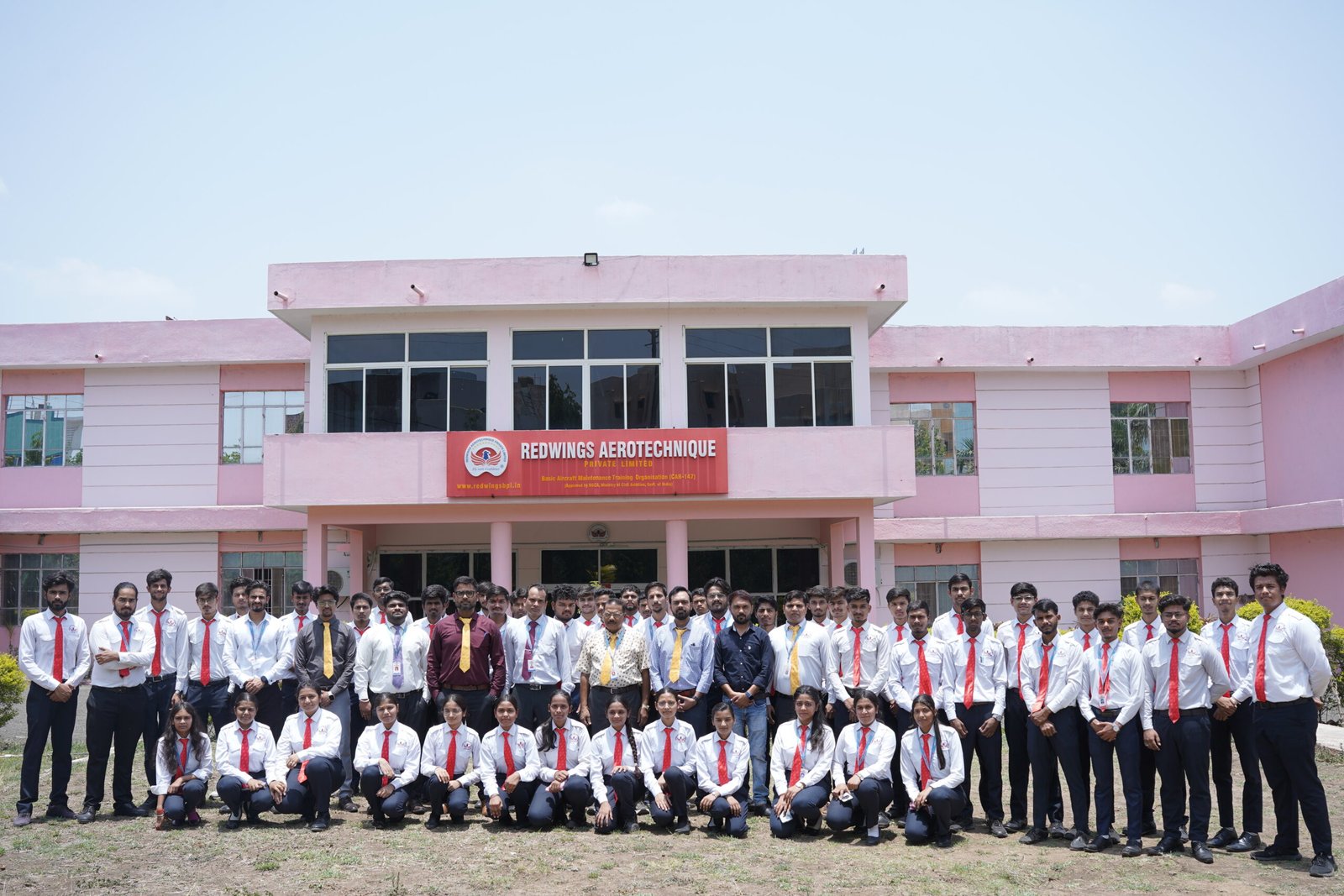
Redwings provides DGCA-approved basic training, module-wise exam preparation, lab and workshop practicals, and placement support.
Redwings Group also runs its own DGCA-approved CAR-145 MRO, giving students an understanding of real maintenance standards.
- CAR-147 basic training
- DGCA module preparation
- Practical training
- Placement support
Questions answered
Who issues the AME licence?
The Directorate General of Civil Aviation (DGCA), Government of India.
Does DGCA conduct an entrance exam for AME?
No. Redwings uses its own aptitude test, AMERAT, for admission.
Can a diploma holder become an AME?
Yes. A 3-year engineering diploma in mechanical, electrical or electronics is accepted.
Which stream should I choose?
Read our B1 vs B2 guide or talk to our counsellors to decide.
Keep reading
Related pages and guides from Redwings.