

How aircraft hydraulics work
Hydraulic systems use pressurised fluid to move heavy loads such as landing gear, flight control surfaces, brakes and flaps.
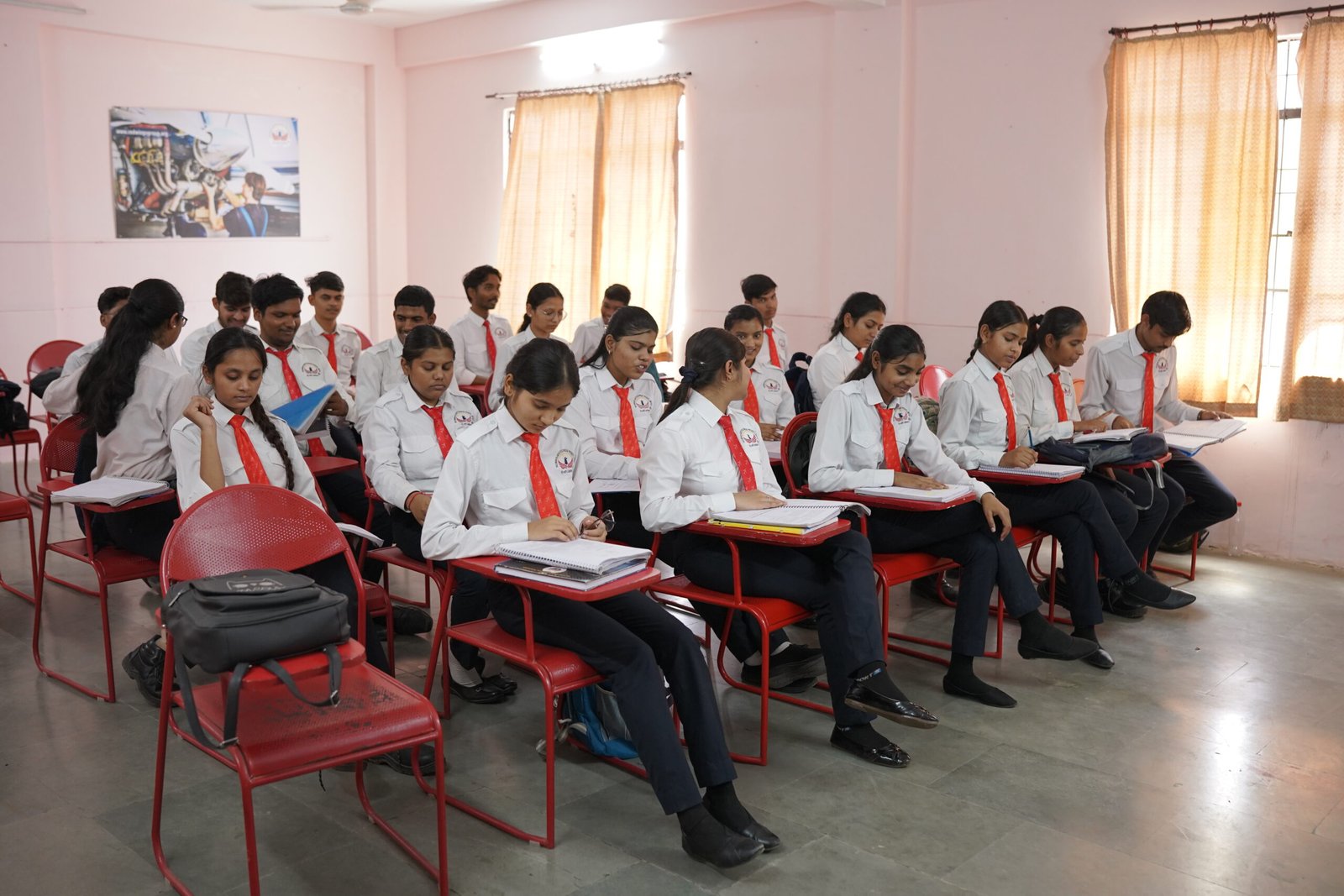
AME students learn hydraulics in the physics and systems modules and practise in the airframe lab.
Main hydraulic components
Reservoir
Stores hydraulic fluid.
Pump
Creates system pressure.
Valves
Direct and control fluid flow.
Actuators
Turn pressure into movement.
Hydraulic system maintenance
Engineers check fluid levels and contamination, inspect for leaks, replace seals and filters, and test system operation.
- Fluid checks
- Leak inspection
- Filter changes
- Operational tests
Where you study hydraulics
Physics (Module 2) explains pressure; Module 11 or 13 covers the aircraft hydraulic system in detail.
- Module 2 physics
- Module 11 systems
- Airframe lab
- Faculty guidance
Train at Redwings Aerotechnique, Bhopal
Redwings Aerotechnique is a DGCA-approved CAR-147 basic maintenance training organisation in Bhopal, Madhya Pradesh. It is part of Redwings Group, which also runs its own DGCA-approved CAR-145 maintenance, repair and overhaul organisation. This connection means students learn aircraft maintenance from people who work to real industry standards every day.
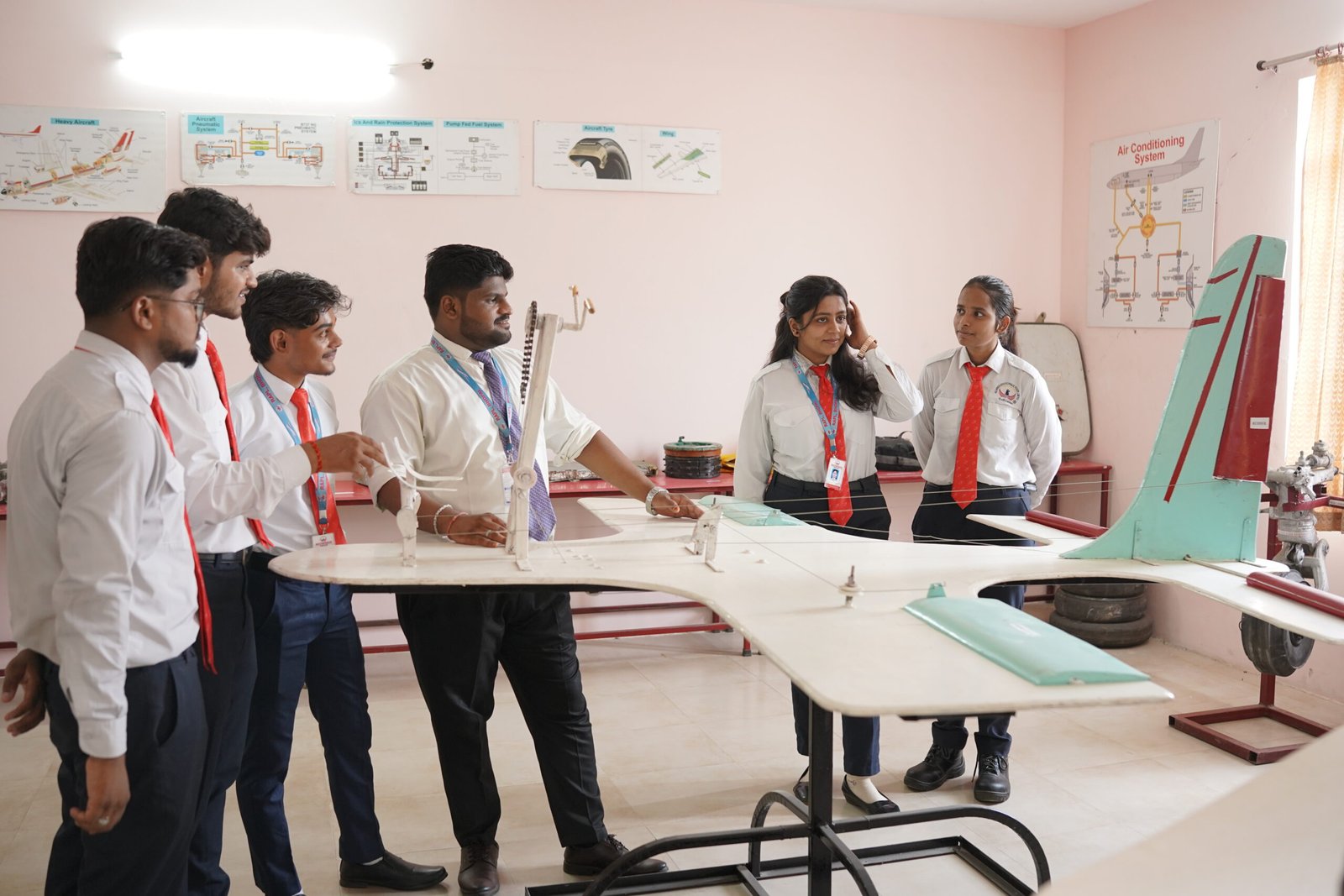
Students can choose the B1.1 (turbine aeroplanes), B1.2 (piston aeroplanes) or B2 (avionics) stream, or the dual programme AME + B.E. Classes follow the DGCA syllabus and are supported by an engine system lab, airframe system lab, electrical, radio navigation, instrument and battery workshops, a general workshop, audio-visual classrooms and a library. Teaching and counselling are available in Hindi and English.
Admission is through the Redwings Aerotechnique admission test, or by direct joining after an eligibility check. Merit scholarships are offered on the admission test score. Redwings students have recorded 100% results in DGCA module examinations across several sessions, and the first Redwings batch achieved 100% placement in airline and MRO jobs.
You are welcome to visit the Bhopal campus to see the labs and workshops, meet the faculty and talk to the admission team before you decide. Parents can join the counselling session too.
Visit or call us
- Pragyan Nursing College Campus, Abbas Nagar, Gondermau, Bypass Road, Gandhi Nagar, near R.G.P.V., Bhopal 462036
- +91 95891 97505
- +91 96855 57506
- redwingsaerotechnique@gmail.com
Why students choose Redwings
Hydraulics: power in a small package
Hydraulic systems let small pumps and actuators move very large loads. Pushing a heavy landing gear into its bay or holding a flight control surface against strong airflow needs large forces, and hydraulics provide them efficiently.
The basic principle
Hydraulics use a liquid that does not compress easily. Pressure created by a pump is transmitted through pipes to an actuator, where it acts on a piston to create movement. Because pressure acts on the piston area, a small pump can create a large force.
System components
A typical system includes a reservoir, engine-driven or electric pumps, filters, pressure relief valves, accumulators that store pressure, selector valves, actuators and indication systems. Large aircraft often have more than one independent hydraulic system for redundancy.
Maintenance
Engineers check fluid levels and condition, look for leaks, replace filters and seals, bleed air from systems and carry out operational tests. Hydraulic fluid can be harmful, so protective equipment and careful handling are important.
Learning it at Redwings
Physics in Module 2 explains pressure and force, and Module 11 or 13 covers the hydraulic system. The airframe lab helps students see real components.
Questions answered
Short, clear answers to the questions students and parents ask most. Still unsure about anything? Our admission team is happy to help.
Why do aircraft use hydraulics?
To move heavy loads with small, light components.
What is a common hydraulic check?
Fluid level and leak inspection.
Which module covers it?
Module 11 for B1 and Module 13 for B2.
Is it practical?
Yes, students see components in the airframe lab.
Keep reading
Related pages and guides from Redwings.