
Keeping the cabin comfortable at altitude
At high altitude the air is thin and cold. Pressurisation keeps cabin pressure at a safe level, and air conditioning controls temperature and fresh air.
These systems are covered in the aircraft systems modules.
Main components
Air source
Bleed air or electric compressors.
Packs
Cool and condition the air.
Outflow valve
Controls cabin pressure.
Oxygen
Backup for crew and passengers.
System maintenance
Engineers check pressure controllers, outflow valves, ducts, filters and oxygen systems, and investigate pressurisation snags.
- Controller checks
- Duct inspection
- Filter changes
- Oxygen servicing
Where you study it
Physics (Module 2) explains pressure and temperature; Module 11 or 13 covers the systems.
- Module 2
- Module 11 / 13
- Faculty guidance
- Exam prep
Train at Redwings Aerotechnique, Bhopal
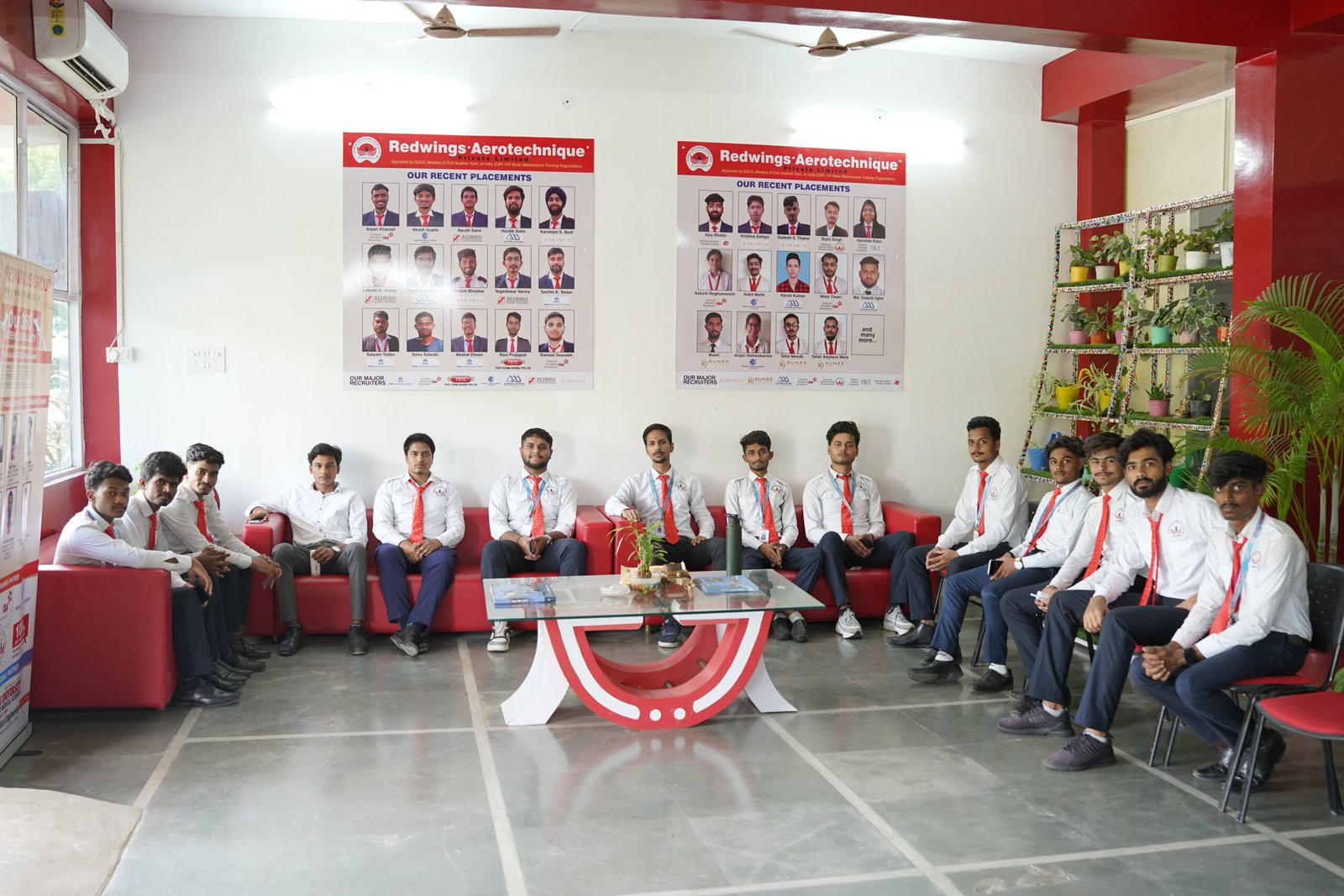
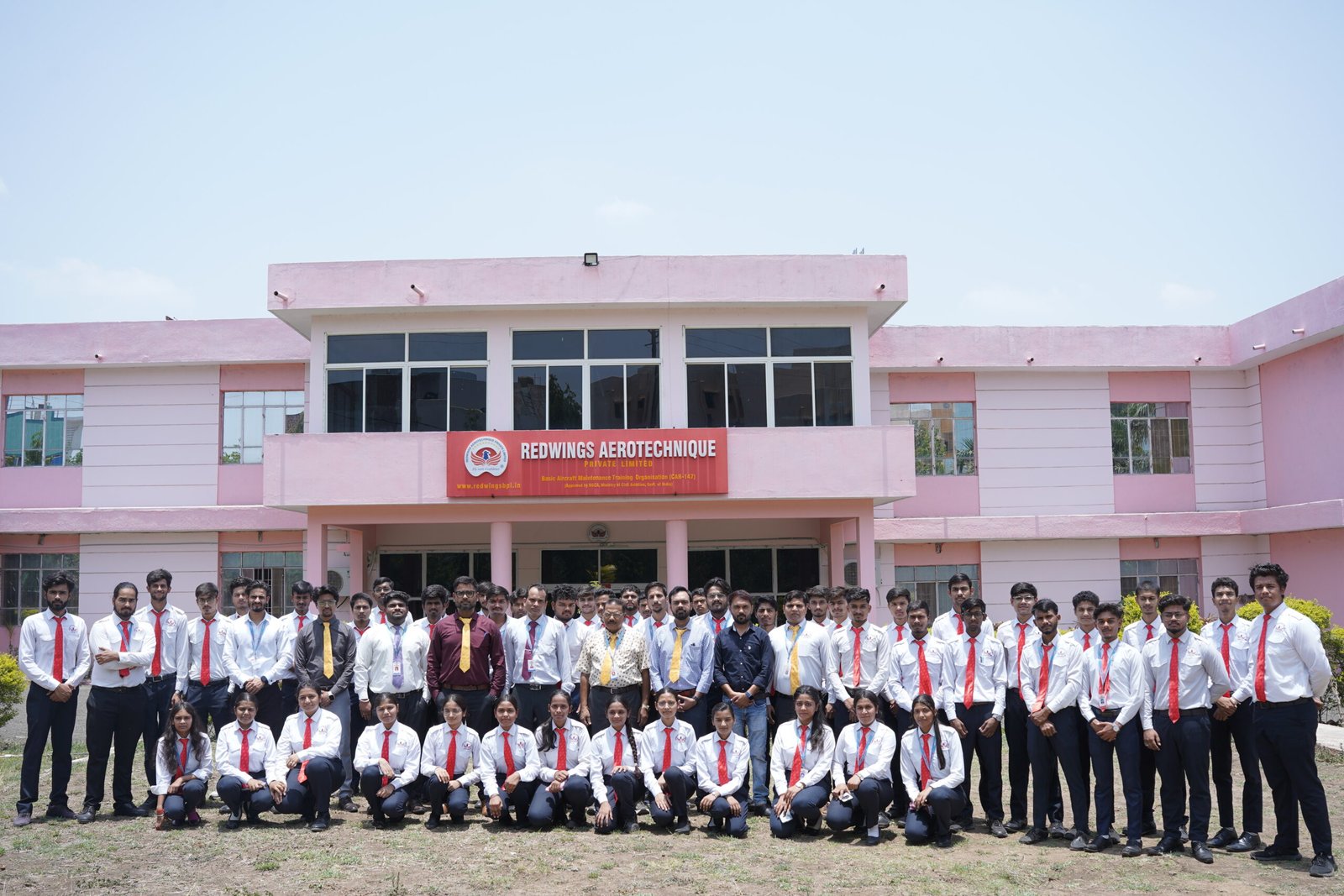
Redwings Aerotechnique is a DGCA-approved CAR-147 basic maintenance training organisation in Bhopal, Madhya Pradesh. It is part of Redwings Group, which also runs its own DGCA-approved CAR-145 maintenance, repair and overhaul organisation. This connection means students learn aircraft maintenance from people who work to real industry standards every day.
Students can choose the B1.1 (turbine aeroplanes), B1.2 (piston aeroplanes) or B2 (avionics) stream, or the dual programme AME + B.E. Classes follow the DGCA syllabus and are supported by an engine system lab, airframe system lab, electrical, radio navigation, instrument and battery workshops, a general workshop, audio-visual classrooms and a library. Teaching and counselling are available in Hindi and English.
Admission is through the Redwings Aerotechnique admission test, or by direct joining after an eligibility check. Merit scholarships are offered on the admission test score. Redwings students have recorded 100% results in DGCA module examinations across several sessions, and the first Redwings batch achieved 100% placement in airline and MRO jobs.
You are welcome to visit the Bhopal campus to see the labs and workshops, meet the faculty and talk to the admission team before you decide. Parents can join the counselling session too.
Visit or call us
- Pragyan Nursing College Campus, Abbas Nagar, Gondermau, Bypass Road, Gandhi Nagar, near R.G.P.V., Bhopal 462036
- +91 95891 97505
- +91 96855 57506
- redwingsaerotechnique@gmail.com
Why students choose Redwings
How pressurisation keeps passengers safe
At cruising altitude, the outside air is too thin for people to breathe comfortably and is very cold. The pressurisation and air conditioning systems create a safe, comfortable environment inside the cabin.
Supplying air
Air is supplied either from the engines as bleed air or from electrically driven compressors. It passes through air conditioning packs that cool it, remove moisture and mix it to the right temperature before it enters the cabin.
Controlling pressure
The cabin pressure controller manages an outflow valve that lets air leave the fuselage. By opening or closing this valve, the system keeps cabin altitude within limits and changes pressure gradually so passengers stay comfortable during climb and descent. Safety valves protect the structure from too much or too little pressure.
Oxygen backup
If pressurisation is lost, oxygen systems supply crew and passengers until the aircraft descends to a safe altitude.
Maintenance
Engineers inspect ducts and valves, test controllers, replace filters, investigate leaks and service oxygen systems with strict cleanliness and fire safety rules.
Learning it at Redwings
Physics in Module 2 explains pressure and gas behaviour, and Modules 11 and 13 cover the aircraft systems in detail.
Questions answered
Short, clear answers to the questions students and parents ask most. Still unsure about anything? Our admission team is happy to help.
Why pressurise the cabin?
So people can breathe comfortably at altitude.
What does the outflow valve do?
It controls cabin pressure by releasing air.
Who maintains these systems?
B1 and B2 engineers within their privileges.
Which module covers it?
Module 11 or 13.
Keep reading
Related pages and guides from Redwings.