


Strong, light and modern
Composites such as carbon fibre and glass fibre reinforced plastics are used in modern aircraft because they are strong and light.
Engineers must know how to inspect and repair composite structures correctly.
Composite basics
Fibres
Carbon, glass and aramid fibres give strength.
Matrix
Resin holds fibres together.
Sandwich
Honeycomb core between skins.
Damage
Delamination and impact damage.
Inspecting composites
Engineers use visual checks, tap tests and NDT to find damage, and repair as per approved data.
- Tap test
- Visual checks
- NDT
- Approved repairs
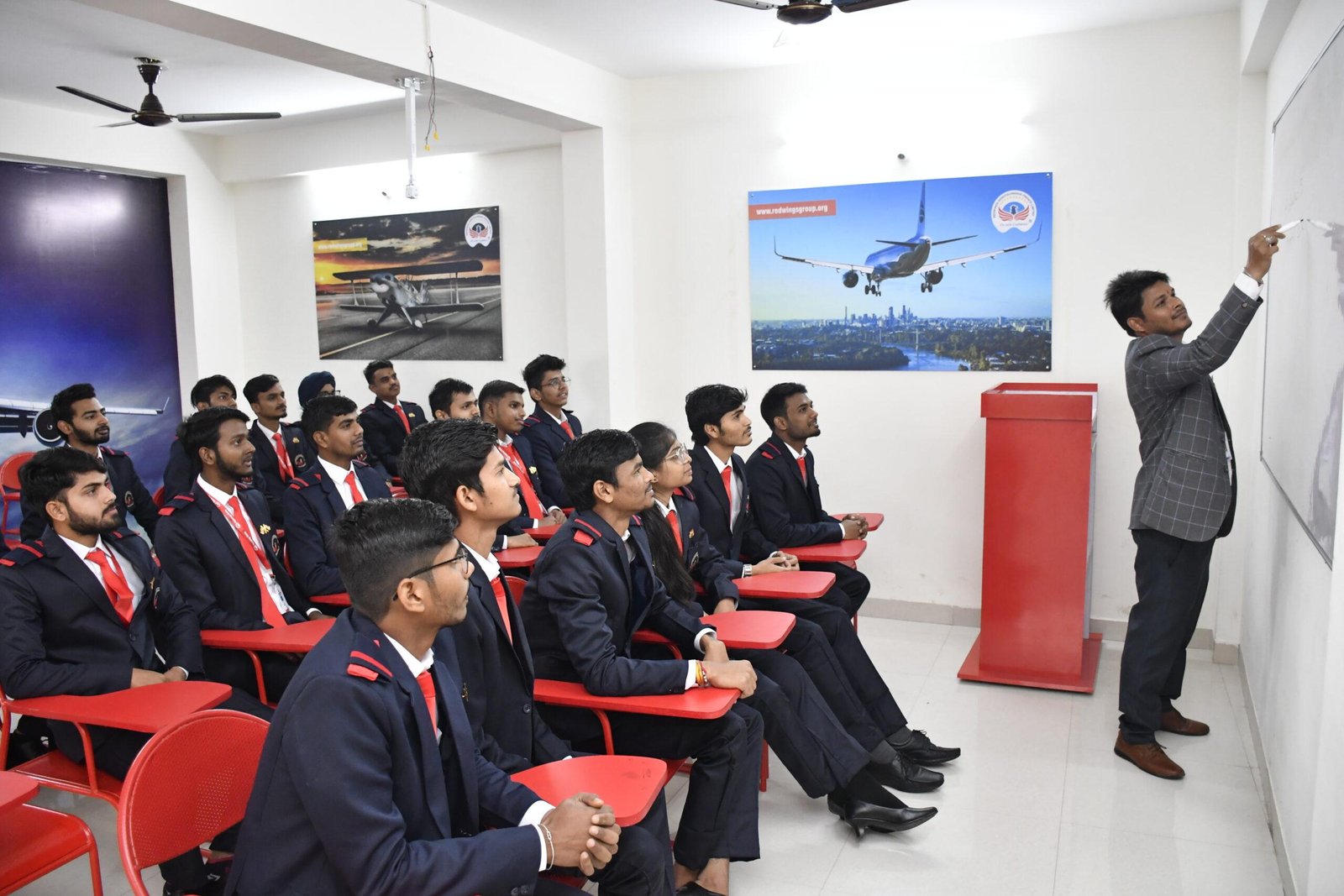
Where you study composites
Module 6 Materials and Hardware covers composites, and Module 7 covers repair practices.
- Module 6
- Module 7
- Workshop practice
- Faculty guidance
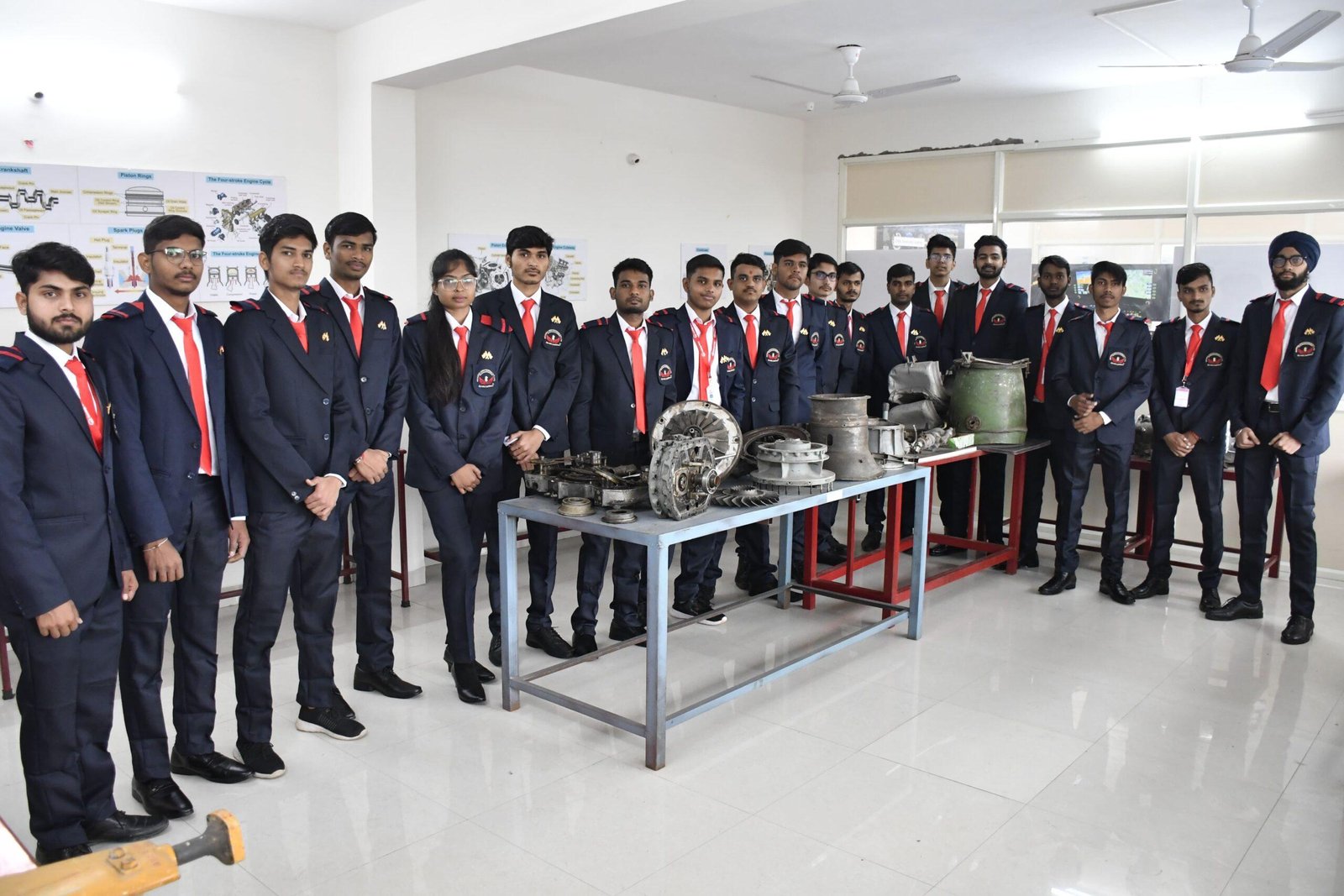
Train at Redwings Aerotechnique, Bhopal
Redwings Aerotechnique is a DGCA-approved CAR-147 basic maintenance training organisation in Bhopal, Madhya Pradesh. It is part of Redwings Group, which also runs its own DGCA-approved CAR-145 maintenance, repair and overhaul organisation. This connection means students learn aircraft maintenance from people who work to real industry standards every day.
Students can choose the B1.1 (turbine aeroplanes), B1.2 (piston aeroplanes) or B2 (avionics) stream, or the dual programme AME + B.E. Classes follow the DGCA syllabus and are supported by an engine system lab, airframe system lab, electrical, radio navigation, instrument and battery workshops, a general workshop, audio-visual classrooms and a library. Teaching and counselling are available in Hindi and English.
Admission is through the Redwings Aerotechnique admission test, or by direct joining after an eligibility check. Merit scholarships are offered on the admission test score. Redwings students have recorded 100% results in DGCA module examinations across several sessions, and the first Redwings batch achieved 100% placement in airline and MRO jobs.
You are welcome to visit the Bhopal campus to see the labs and workshops, meet the faculty and talk to the admission team before you decide. Parents can join the counselling session too.
Visit or call us
- Pragyan Nursing College Campus, Abbas Nagar, Gondermau, Bypass Road, Gandhi Nagar, near R.G.P.V., Bhopal 462036
- +91 95891 97505
- +91 96855 57506
- redwingsaerotechnique@gmail.com
Why students choose Redwings
Working with composites as an AME
Composite materials have changed how aircraft are built. Many modern aircraft use carbon fibre and glass fibre reinforced plastics in control surfaces, fairings, floors, radomes and even major structures. Composites are popular because they are strong for their weight, resist corrosion and can be shaped into smooth aerodynamic forms.
How composites are made
A composite combines fibres, which carry the load, with a resin matrix that holds the fibres together and transfers load between them. Layers of fibre called plies are stacked in different directions to give strength where it is needed. Sandwich structures place a lightweight honeycomb or foam core between two thin skins to create stiff, light panels.
Typical damage
Composites do not dent like metal. Impact damage can hide under an undamaged-looking surface as delamination, where plies separate, or disbonding, where a skin separates from its core. Moisture can enter damaged areas, and heat or lightning strikes can also cause damage.
Inspection and repair
Engineers start with careful visual inspection, then use tap testing and non-destructive methods such as ultrasonic inspection to find hidden damage. Repairs follow the structural repair manual exactly: removing damaged material, preparing the surface, laying up new plies in the right orientation and curing under controlled temperature and pressure.
Learning it at Redwings
Composites are part of Module 6 Materials and Hardware, and repair practices are covered in Module 7. Faculty connect these topics with examples from real maintenance so that students understand both the theory and the care needed when working on composite structures.
Questions answered
Short, clear answers to the questions students and parents ask most. Still unsure about anything? Our admission team is happy to help.
Why use composites?
They are strong and light.
What is delamination?
Separation of composite layers.
Which module covers composites?
Module 6.
Are repairs special?
Yes, they follow approved procedures.
Keep reading
Related pages and guides from Redwings.