

Mathematics for aircraft maintenance
Module 1 builds the maths every aircraft engineer uses: arithmetic, algebra, geometry and basic trigonometry. It is common to all AME streams.
Engineers use these skills to read drawings, work out measurements, convert units, calculate torque values and understand charts in maintenance manuals.
What you study in Module 1
Arithmetic
Fractions, decimals, ratios, percentages, averages and units.
Algebra
Equations, indices, simple formulas and their use.
Geometry
Shapes, areas, volumes and graphs.
Trigonometry
Angles and the basic ratios used in technical drawings.
Maths on the hangar floor
A maintenance engineer converts units, checks tolerances and reads tables in manuals every day. Small errors in calculation can lead to wrong torque, wrong fluid quantity or a wrong measurement.
Module 1 makes these calculations second nature.
- Unit conversions
- Tolerances and limits
- Reading charts and tables
- Drawing measurements
Preparing for the Module 1 exam
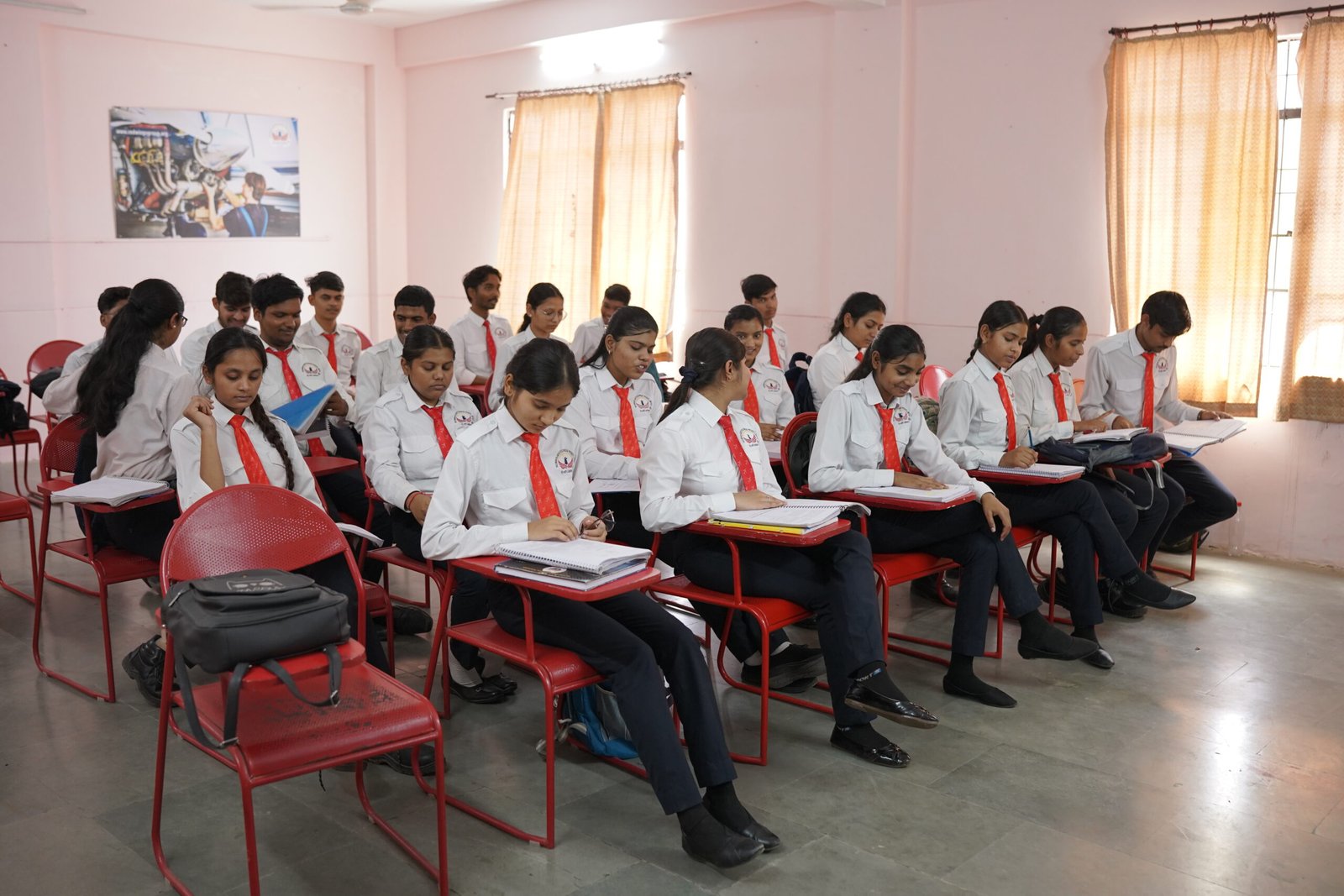
Practise regularly, revise formulas and solve past-pattern questions. At Redwings, faculty teach Module 1 step by step and hold doubt sessions before the exam.
Strong maths also helps in Physics, Electrical and Aerodynamics modules.
- Daily practice
- Formula revision
- Doubt sessions with faculty
- Timed practice tests
Train at Redwings Aerotechnique, Bhopal
Redwings Aerotechnique is a DGCA-approved CAR-147 basic maintenance training organisation in Bhopal, Madhya Pradesh. It is part of Redwings Group, which also runs its own DGCA-approved CAR-145 maintenance, repair and overhaul organisation. This connection means students learn aircraft maintenance from people who work to real industry standards every day.
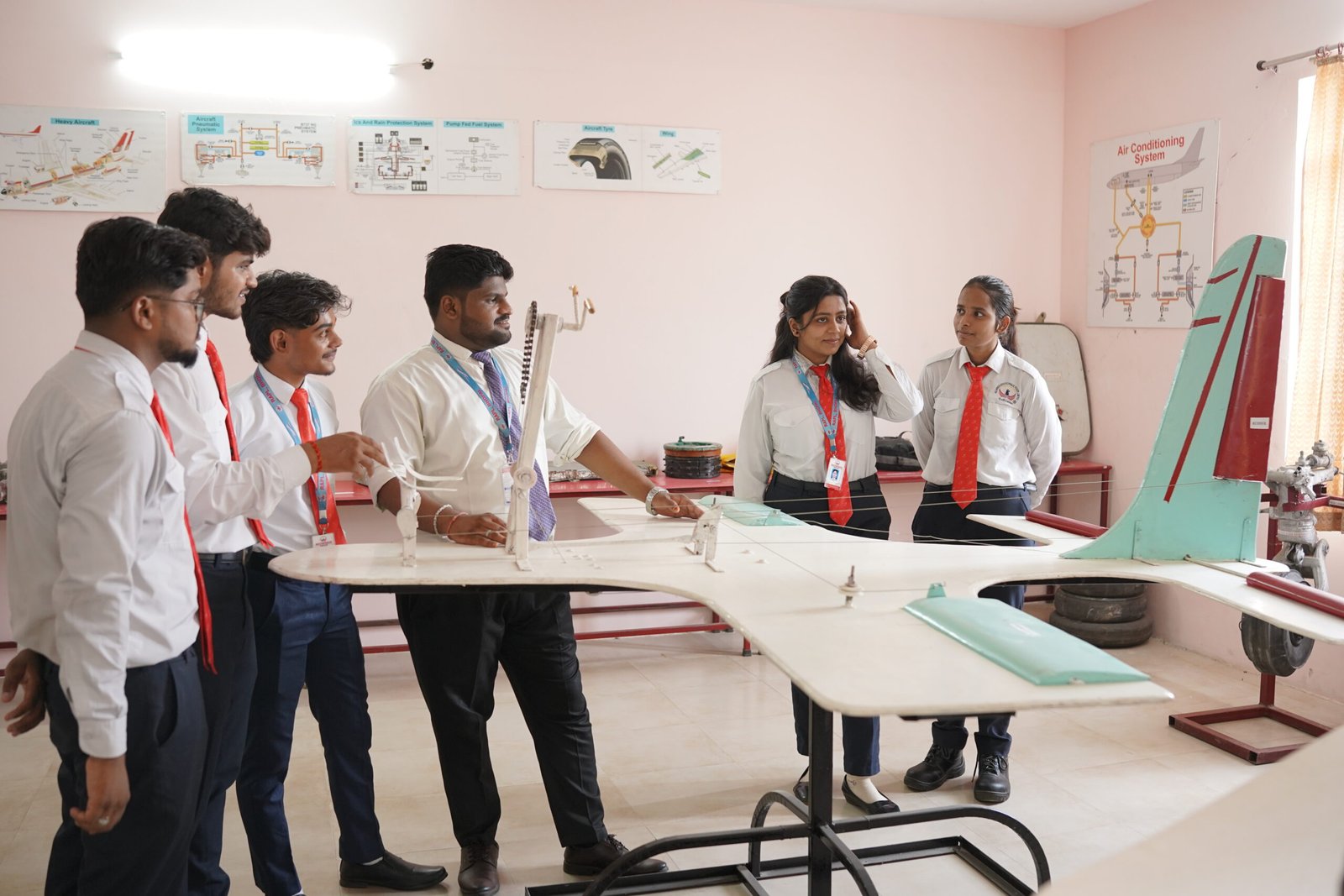
Students can choose the B1.1 (turbine aeroplanes), B1.2 (piston aeroplanes) or B2 (avionics) stream, or the dual programme AME + B.E. Classes follow the DGCA syllabus and are supported by an engine system lab, airframe system lab, electrical, radio navigation, instrument and battery workshops, a general workshop, audio-visual classrooms and a library. Teaching and counselling are available in Hindi and English.
Admission is through the Redwings Aerotechnique admission test, or by direct joining after an eligibility check. Merit scholarships are offered on the admission test score. Redwings students have recorded 100% results in DGCA module examinations across several sessions, and the first Redwings batch achieved 100% placement in airline and MRO jobs.
You are welcome to visit the Bhopal campus to see the labs and workshops, meet the faculty and talk to the admission team before you decide. Parents can join the counselling session too.
Visit or call us
- Pragyan Nursing College Campus, Abbas Nagar, Gondermau, Bypass Road, Gandhi Nagar, near R.G.P.V., Bhopal 462036
- +91 95891 97505
- +91 96855 57506
- redwingsaerotechnique@gmail.com
Why students choose Redwings
Building confidence in maths
Many students worry about mathematics, but Module 1 focuses on practical skills that improve quickly with practice.
Daily practice
Solving a few problems every day builds speed and confidence more effectively than long sessions before the exam.
Learn with examples
Converting units for fuel, pressure or torque, calculating areas for repairs and reading graphs from manuals make maths feel useful.
Ask for help
Doubt sessions with faculty clear confusion early, before it affects later modules.
Questions answered
Short, clear answers to the questions students and parents ask most. Still unsure about anything? Our admission team is happy to help.
Is Module 1 common to all streams?
Yes. Mathematics is a foundation module for B1 and B2.
Is advanced maths needed?
No. The module covers practical school-level maths applied to aviation.
Who conducts the exam?
DGCA conducts the module examinations as per its schedule.
How does Redwings help?
Classes as per the DGCA syllabus, revision and doubt sessions.
Keep reading
Related pages and guides from Redwings.