Licensed engineer or technician?
Aircraft technicians and licensed aircraft maintenance engineers both work on aircraft, but their responsibilities differ. Technicians carry out maintenance tasks under supervision, while a DGCA-licensed and authorised AME can certify the work and release the aircraft to service.
The AME path starts with three years of basic training at a DGCA-approved CAR-147 organisation, followed by experience, DGCA module examinations and the licence.
Many people start as technicians or trainees and grow into licensed engineers by completing the required training, modules and experience.
How the roles differ
Authority
Only licensed, authorised AMEs certify work.
Training
AME needs CAR-147 basic training and DGCA modules.
Responsibility
AMEs are accountable for airworthiness.
Growth
AMEs move to type ratings and senior roles.
Why the licence matters
The certificate of release to service is the final step before an aircraft flies. It can only be signed by appropriately licensed and authorised staff.
That responsibility is why licensed engineers are central to every maintenance team.
- Certificate of release to service
- Legal accountability
- Higher responsibility
- Wider career options
Start on the licence path
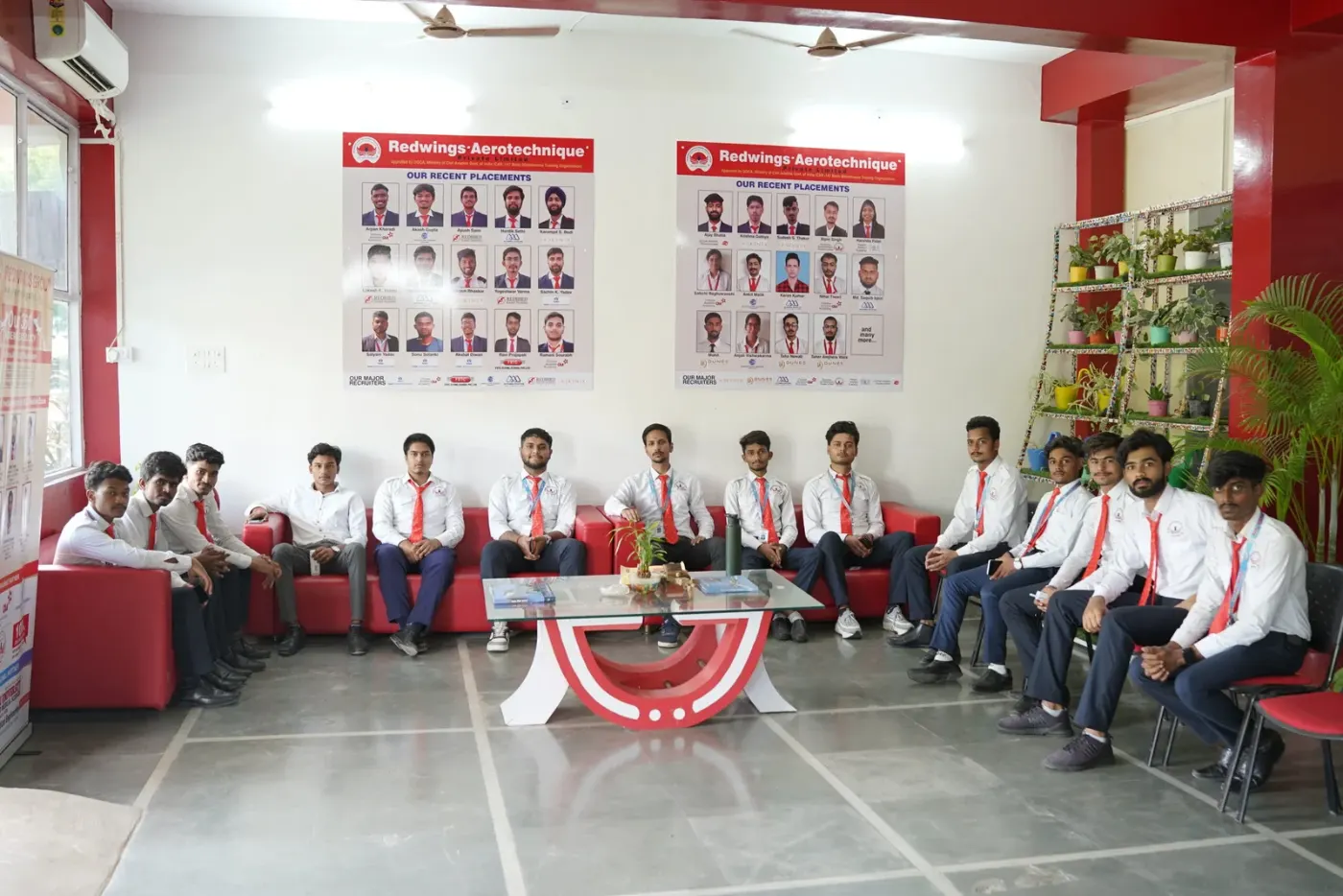
Redwings Aerotechnique is a DGCA-approved CAR-147 institute offering B1.1, B1.2 and B2 basic training, with exposure to the Redwings Group CAR-145 MRO.
The right basic training puts you on the path to becoming a licensed engineer, not just a technician.
- DGCA CAR-147 training
- B1.1, B1.2 and B2 streams
- Exposure to an MRO
- Training and placement package
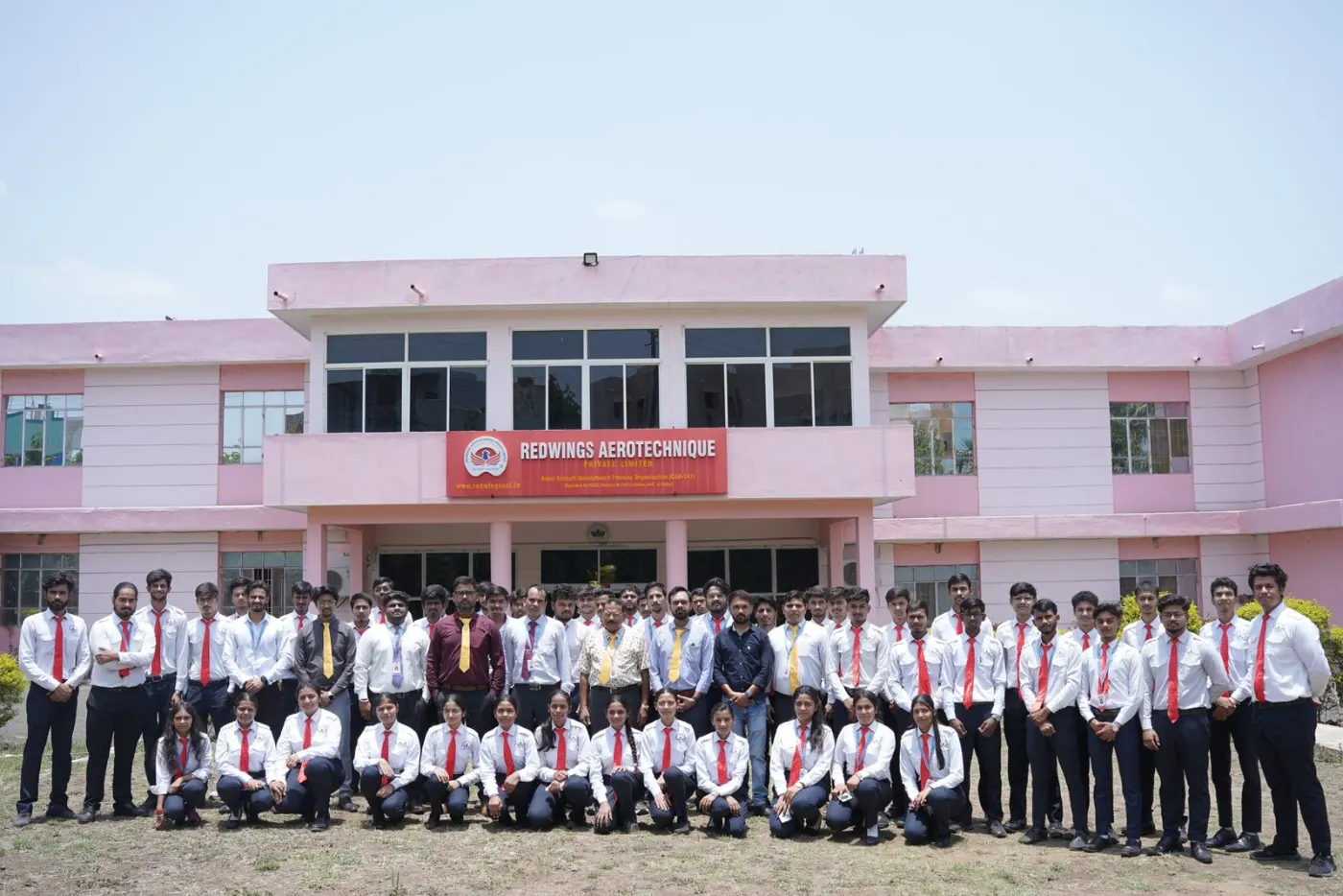
Train at Redwings Aerotechnique, Bhopal
Redwings Aerotechnique is a DGCA-approved CAR-147 basic maintenance training organisation in Bhopal, Madhya Pradesh. It is part of Redwings Group, which also runs its own DGCA-approved CAR-145 maintenance, repair and overhaul organisation. This connection means students learn aircraft maintenance from people who work to real industry standards every day.
Students can choose the B1.1 (turbine aeroplanes), B1.2 (piston aeroplanes) or B2 (avionics) stream, or the dual programme AME + B.E. Classes follow the DGCA syllabus and are supported by an engine system lab, airframe system lab, electrical, radio navigation, instrument and battery workshops, a general workshop, audio-visual classrooms and a library. Teaching and counselling are available in Hindi and English.
Admission is through the Redwings Aerotechnique admission test, the Redwings aptitude test, or by direct joining after an eligibility check. Merit scholarships are offered on the admission test score. Redwings students have recorded 100% results in DGCA module examinations across several sessions, and Redwings has a 100% placement track record in airline and MRO jobs.
You are welcome to visit the Bhopal campus to see the labs and workshops, meet the faculty and talk to the admission team before you decide. Parents can join the counselling session too.
Visit or call us
- Pragyan Nursing College Campus, Abbas Nagar, Gondermau, Bypass Road, Gandhi Nagar, near R.G.P.V., Bhopal 462036
- +91 95891 97505
- +91 96855 57506
- redwingsaerotechnique@gmail.com
Why students choose Redwings
Questions answered
Short, clear answers to the questions students and parents ask most. Still unsure about anything? Our admission team is happy to help.
What is the main difference?
A licensed AME can certify work and release an aircraft; a technician works under supervision.
Can a technician become an AME?
Yes, by completing the required training, DGCA modules and experience.
Where does the AME path start?
With basic training at a DGCA-approved CAR-147 organisation.
Does Redwings offer basic training?
Yes, in B1.1, B1.2 and B2.
How do I apply?
Call +91 95891 97505 or +91 96855 57506 or fill the enquiry form, and the Redwings admission team will guide you.
Keep reading
Related pages and guides from Redwings.